Responsive Kinetic Environments
Translating Wind and Light into Movement and Spatial Experience
2024–2026 · Hong Kong Polytechnic University · Digital Common(s) x Chinese University of Hong Kong
Environmental Sensing · Physical Computing · Kinetic Prototyping
I. OVERVIEW
This collection explores how environmental conditions can shape the behaviour of physical installations. Through sensing, programmed control, and mechanical movement, wind and light become inputs to changing spatial experiences. The projects connect computational design with physical implementation, examining how structures can respond to their surroundings across architectural and sculptural scales.
II. CHAPTER 1: Symbiosis with Nature
Environmental Data as Spatial Experience | 2024
Symbiosis with Nature translates environmental data into movement, light, and sound. Wind sensors installed at a mountain summit transmitted signals to a dome installation below. Changes in wind conditions informed the installation’s responses, allowing visitors to encounter aspects of the surrounding landscape through an indoor spatial experience.
The system connected environmental sensing, data processing, and physical actuation. Movable components and lighting formed a responsive architectural interface, making changing environmental conditions perceptible through the behaviour of the installation.
Development involved prototype testing, circuit integration, and on-site installation. The existing documentation records the connection between control logic and physical operation, from testing individual components to assembling the installation.
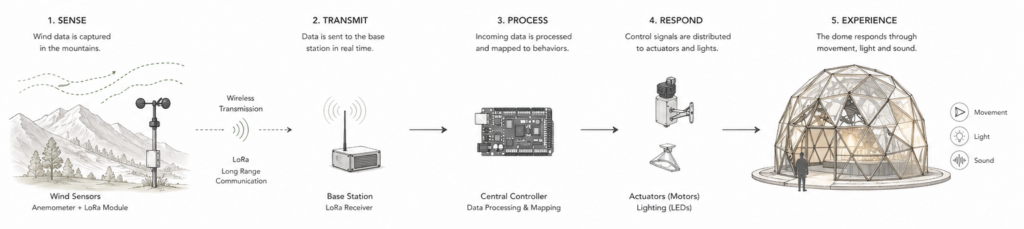
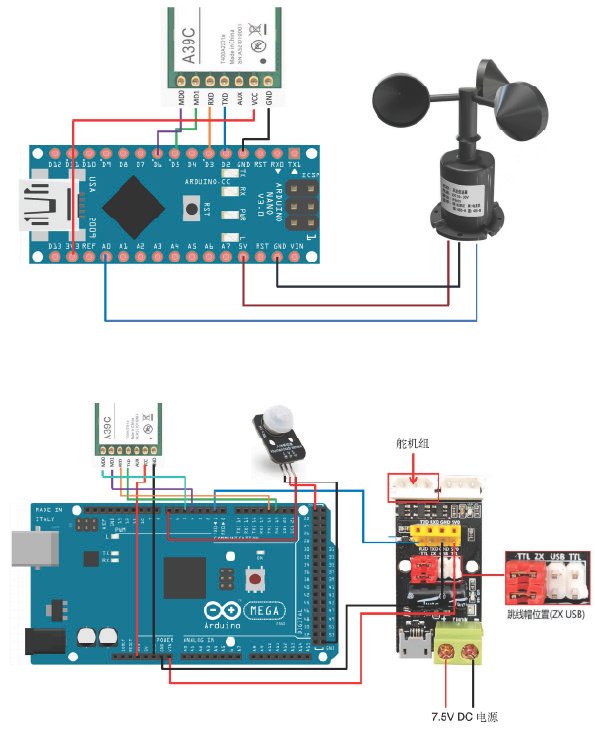
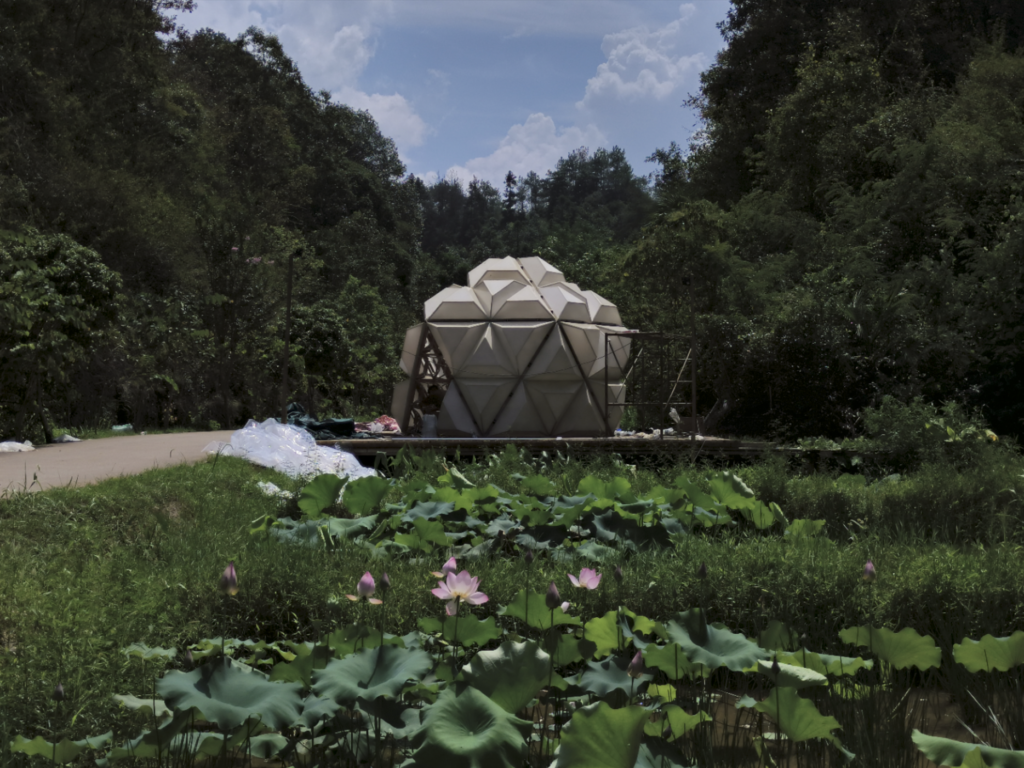
Figure 3. Technical implementation of Symbiosis with Nature: circuit diagrams for environmental sensing and control (left), and the dome installation in its landscape setting (right).
My contribution: I developed visual programming workflows in Grasshopper and led the installation setup.
Research collaboration: School of Design, Hong Kong Polytechnic University, and Central Academy of Fine Arts.
Research associates: Jing Chang and Yichen Wan.
III. CHAPTER 2: Afterlife Form
Light-Responsive Kinetic Sculpture | 2026
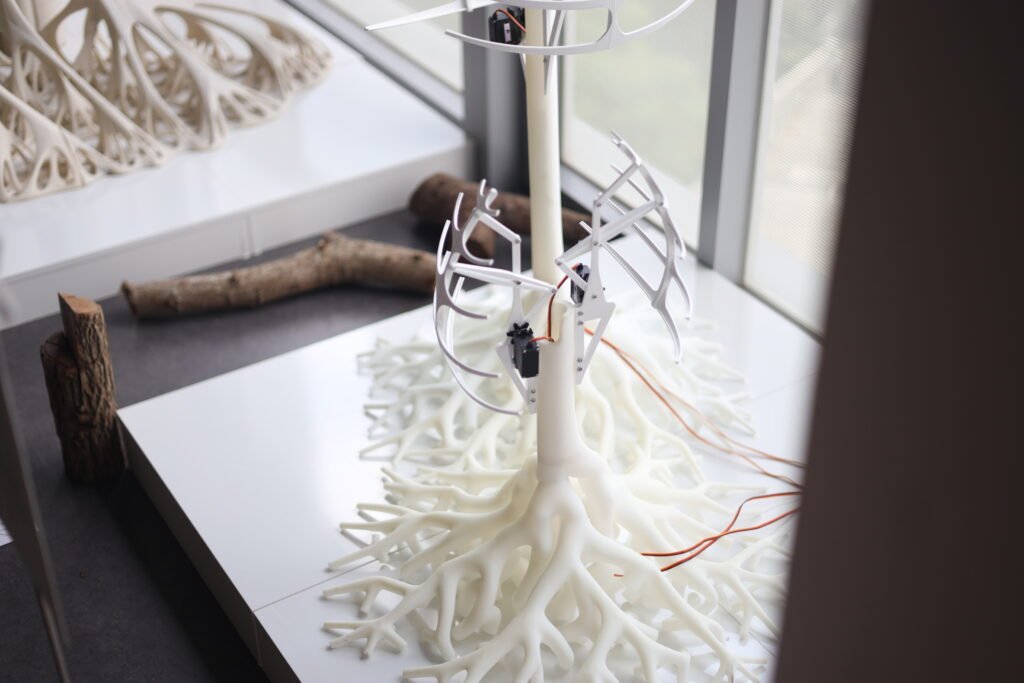
Afterlife Form explores the relationship between biological form, mechanical movement, and environmental response. A static, root-like base supports an upper structure of wings and bone-like elements. Changes in environmental light trigger the upper structure to open, contract, and reorient.
The contrast between the fixed base and moving upper body gives the installation its character. The roots establish continuity and support, while the movement suggests an organism responding to its surroundings. Sensing and actuation become part of the sculpture’s expression.
The project brings together physical form, electronic control, and kinetic behaviour to explore how responsiveness can suggest qualities of living systems.
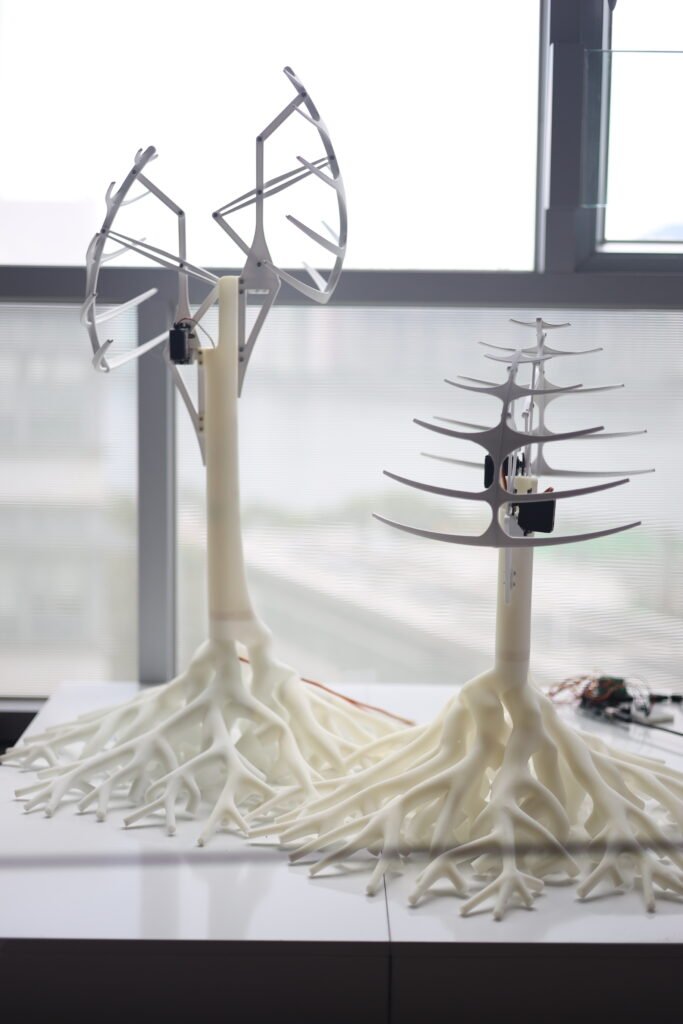
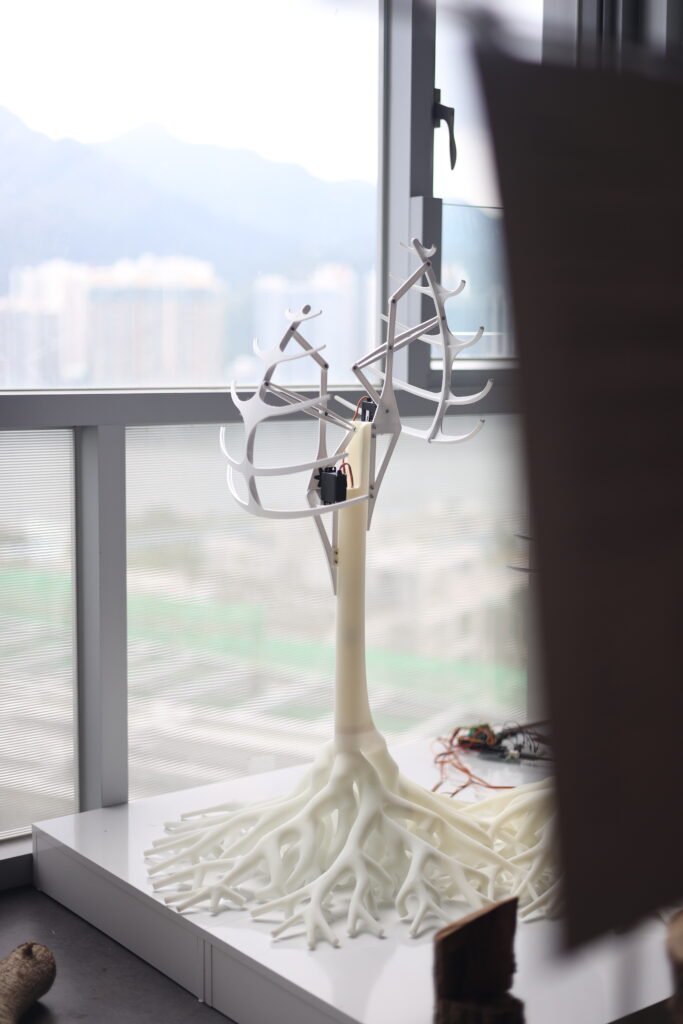
Figure 4. Afterlife Form on display: two kinetic structures with contrasting upper forms (left), and a closer view of the articulated frame and branching base of one structure (right).
Collaborators: Jing Chang, Weihao Yin.
Exhibition venue: Museum of Climate Change, Chinese University of Hong Kong, August 2026.
IV. REFLECTION
Across both projects, responsiveness depends on the relationship between environmental input, control rules, material construction, and physical movement. These works establish a practical foundation for my interest in documenting how computational decisions become observable behaviour in physical environments.