Drawing Machine Series
Exploring how code, movement, and materials shape drawing
2026 · School of Creative Media, City University of Hong Kong
Rhino / Grasshopper · Python · Physical Computing · Universal Robots
I. OVERVIEW
Drawing Machine Series explores how digital paths become physical marks as class demos for the course Creative Coding. Through drawings on paper, dual-pen plotting, hanging pen plotting, and robotic drawing on masks, the series examines how geometry, machine movement, and tool contact influence the drawing process. Developed through creative practice and teaching, the works connect computational design with experiments in drawing tools, mechanisms, and surfaces.
II. CHAPTER 1 – From Rules to Marks
How do geometric rules become material marks?
These studies explore how path design and drawing materials shape an image. Geometric patterns and image-based drawings examine the arrangement of lines, while pen and brush studies explore differences in width, coverage, and texture. Together, they show how the design of a drawing continues through its physical production.
A. Composing Paths
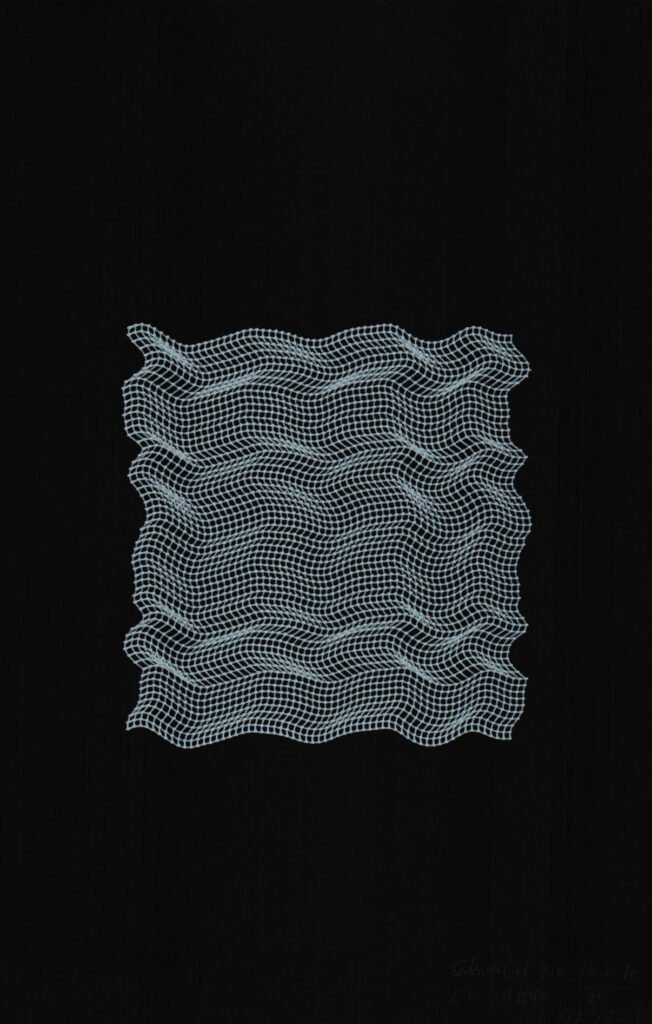
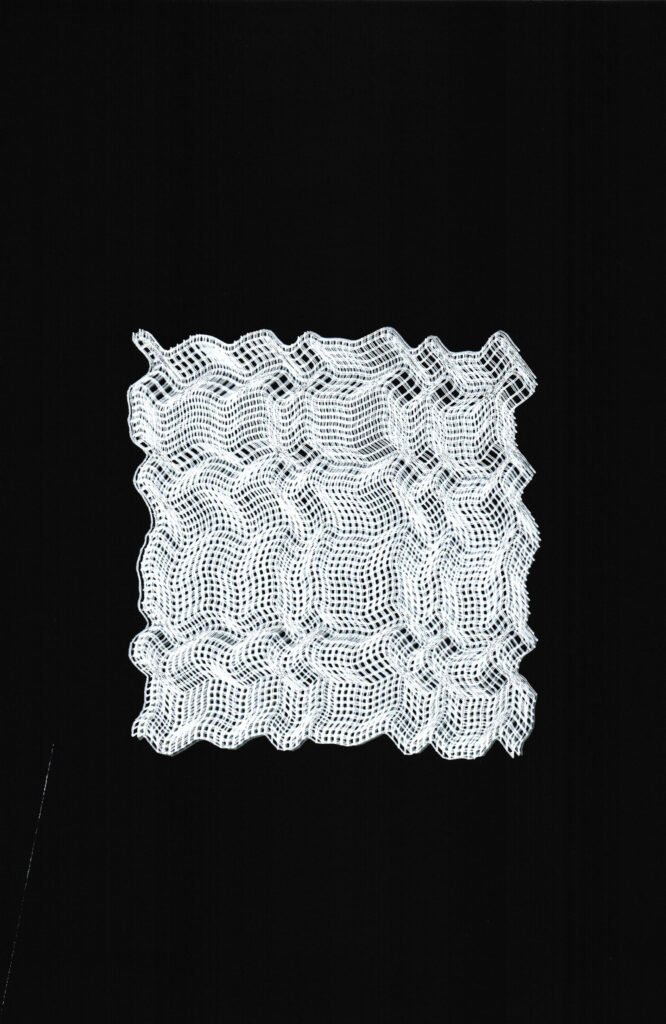
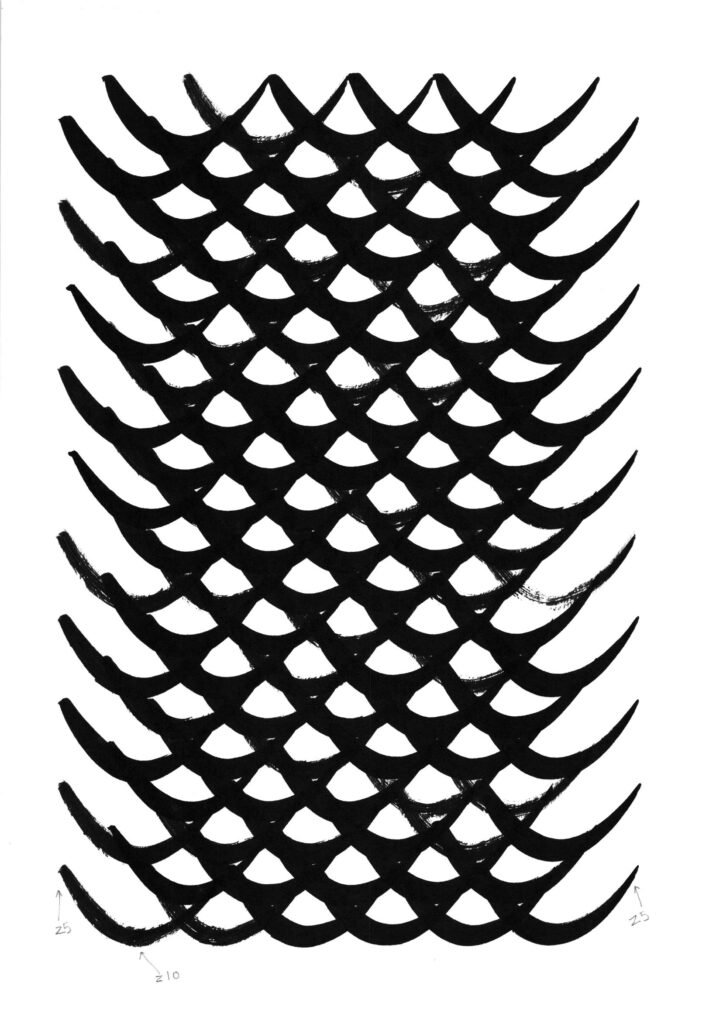
Repeated curves and intersecting lines create patterns of varying density and apparent depth. Image-based studies extend this approach by reconstructing a portrait through curved strokes and text characters. In each case, individual marks form part of a larger visual structure.
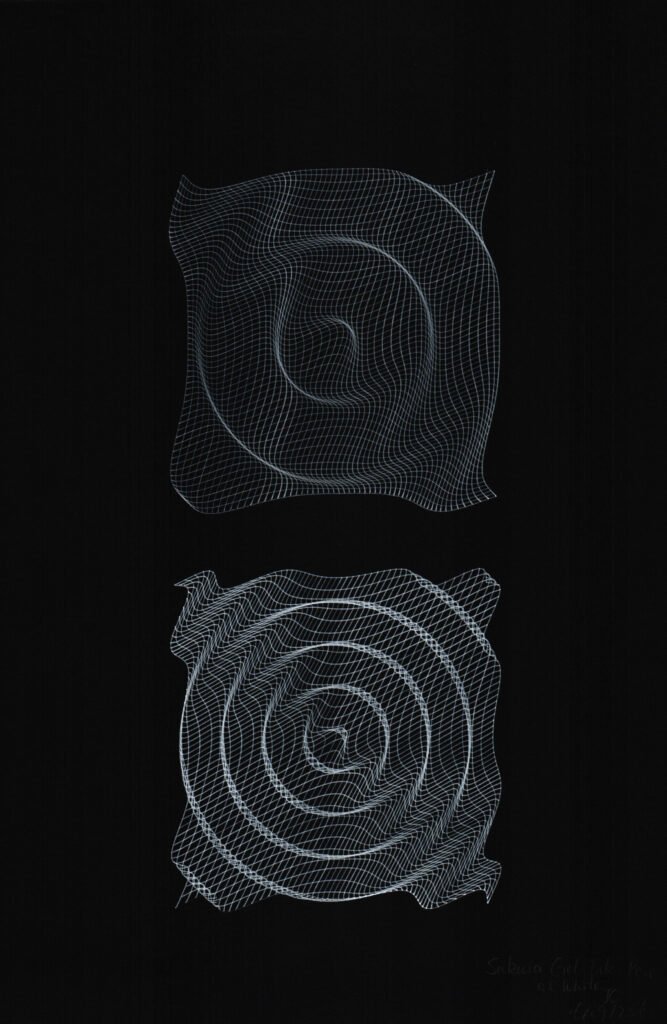
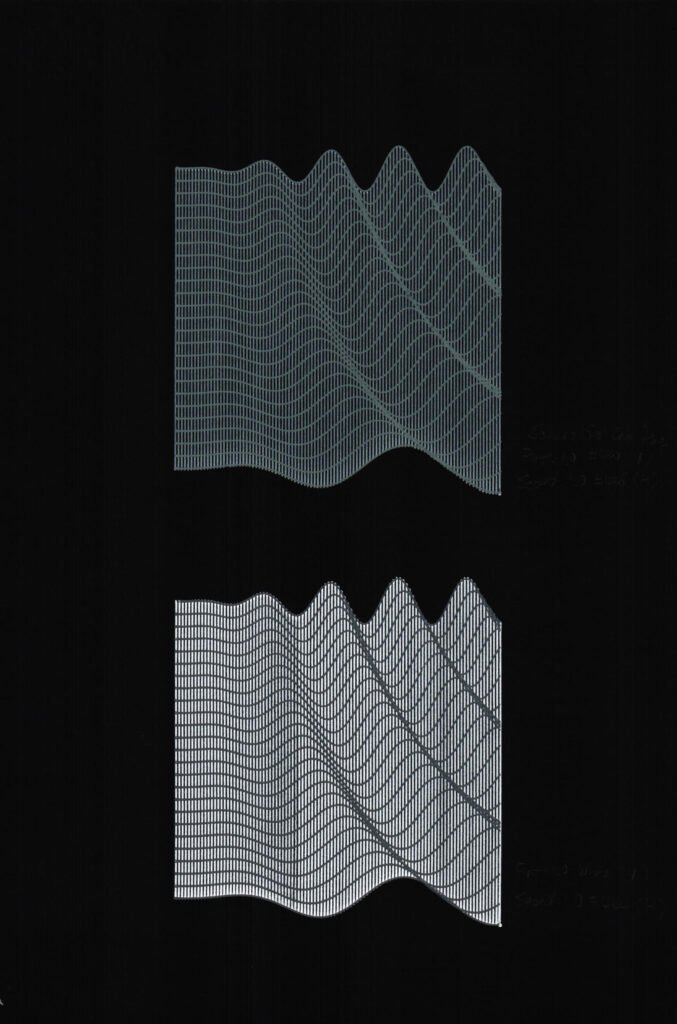
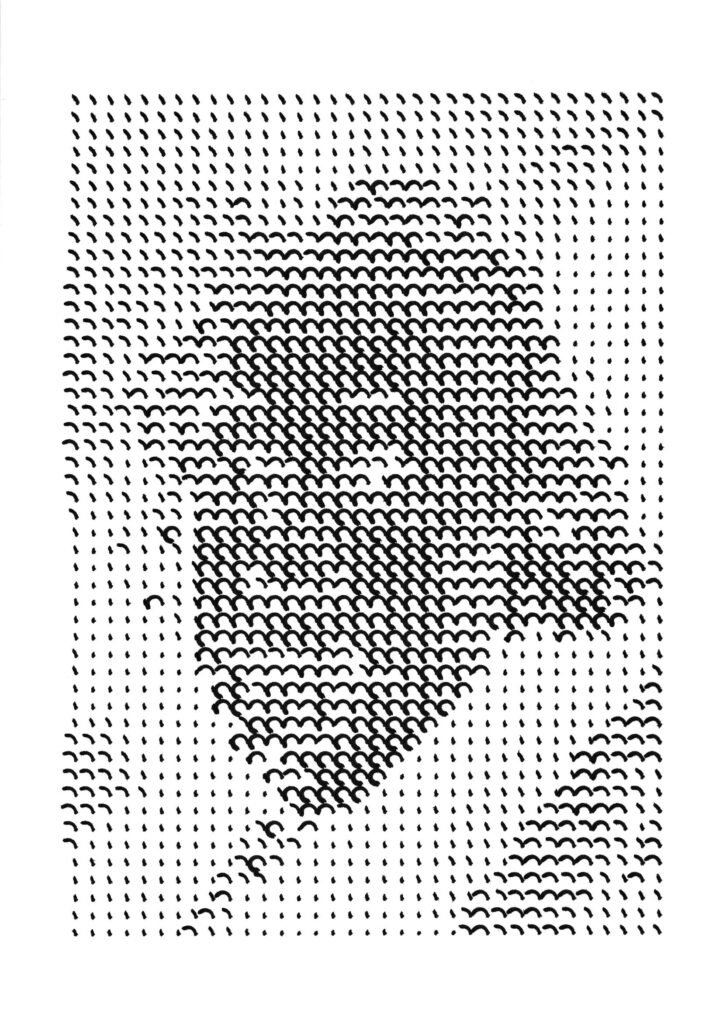
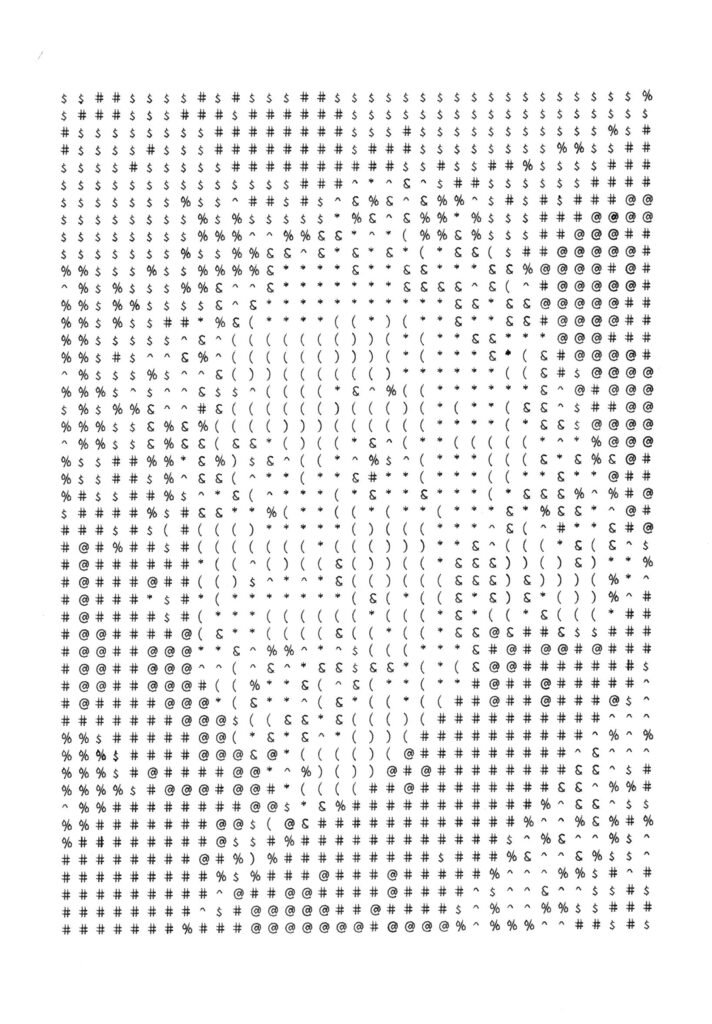
B. Tools, Ink, and Line
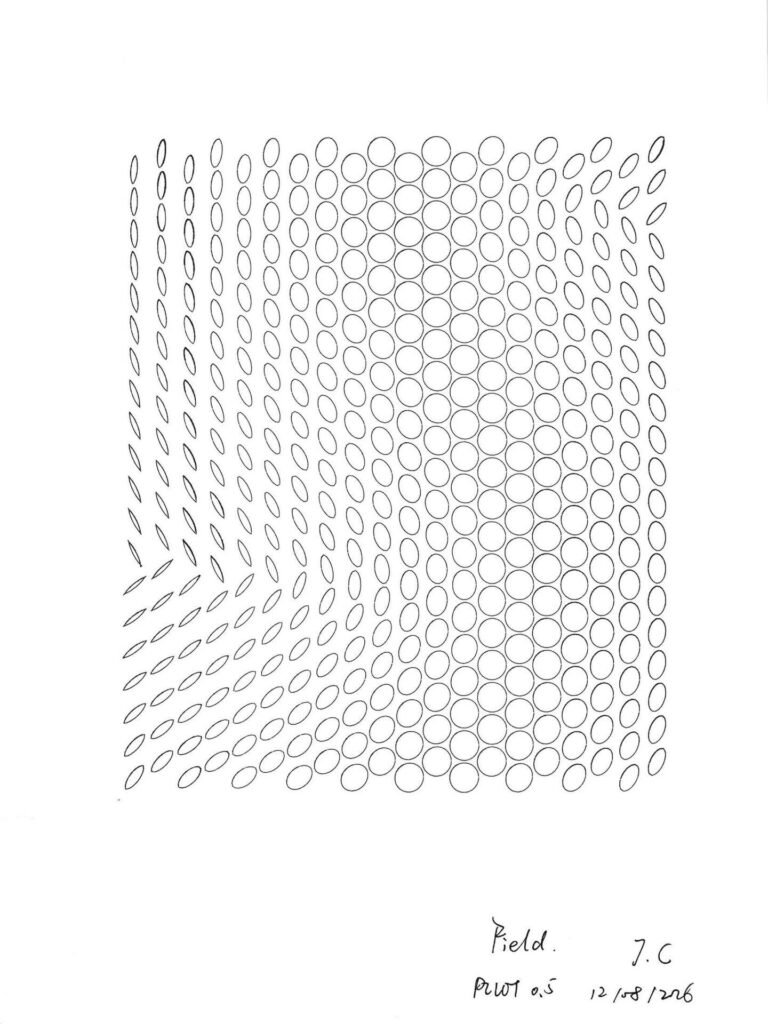
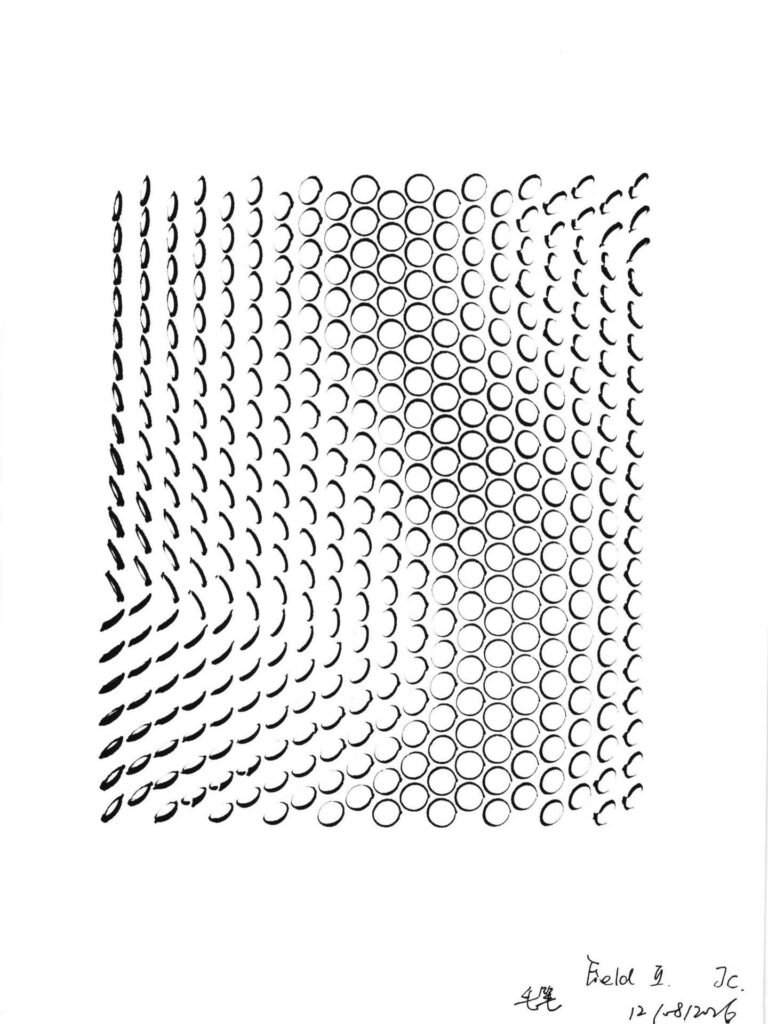
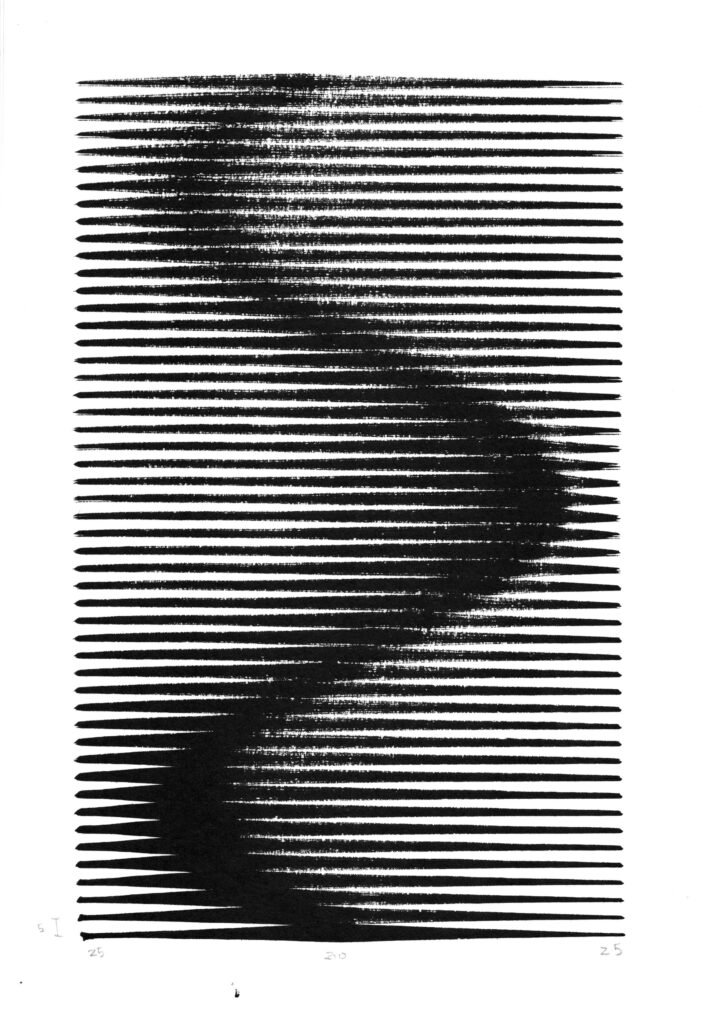
Drawing tools affect how a path appears on paper. The black-paper studies show differences in ink coverage and contrast. The pen studies compare fine outlines with broader marks from a brush pen, showing how line weight changes the balance between individual shapes and the overall pattern.
C. Brush Contact and Composition
The brush studies examine how tool height and contact with paper relate to stroke width and texture. Repeated straight and curved paths produce broad marks, tapered ends, and gaps in ink coverage.
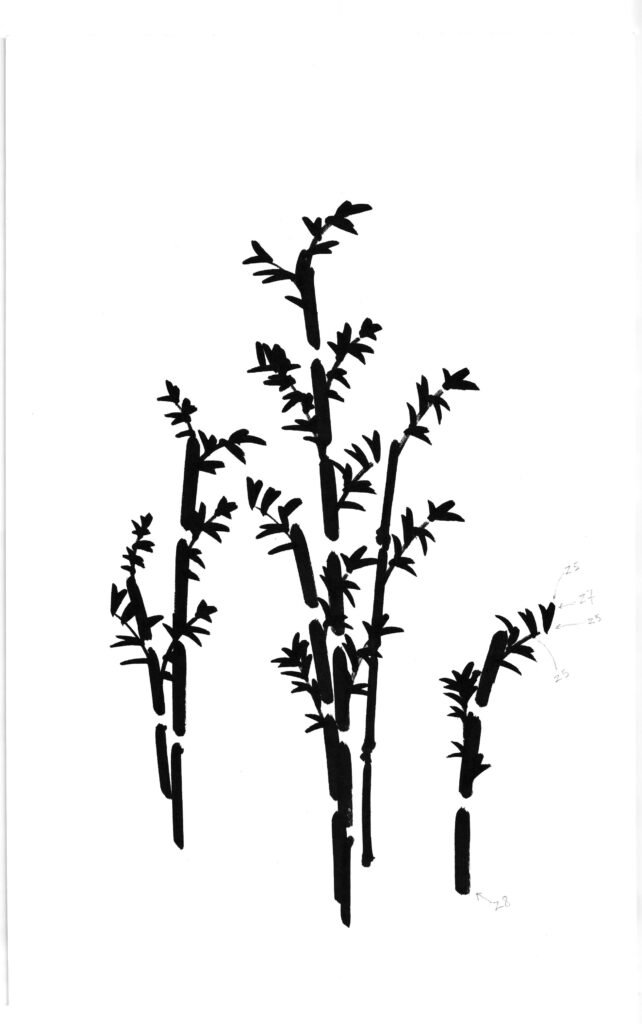
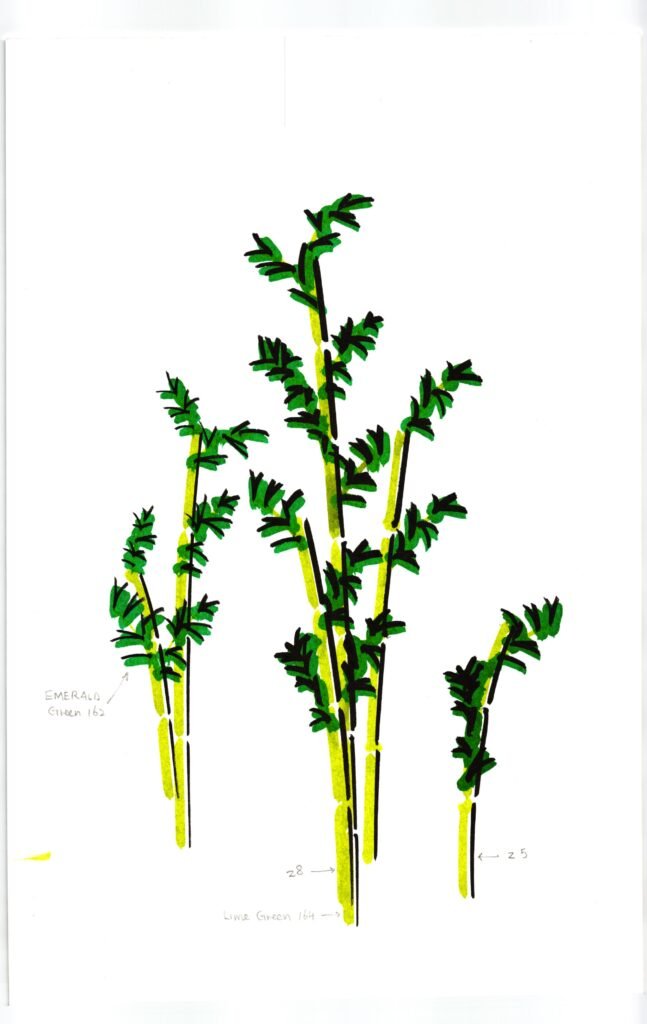
The bamboo drawings bring these qualities into a recognizable image. Segmented stems and clustered leaves connect individual brush strokes with a complete composition. Monochrome and colored versions explore how overlapping marks change the reading of the drawing.
Source Design: Part of Figure 1 and Figure 2 took reference from https://bookofshapes.com/
III. CHAPTER 2 – Coordinating Marks
How does drawing with two pens change the composition?
The dual-pen plotter brings two brush pens into a shared drawing mechanism. Green and pink strokes form repeated patterns that overlap on the paper. The contrasting colors make each pen’s contribution visible while showing how their marks combine into one composition.
This study extends the earlier brush experiments to the relationship between two drawing tools. The spacing between the pens introduces an offset between their marks, while brush contact shapes the width and edges of each stroke. The work connects choices about tools and materials with the physical arrangement of the drawing machine.
IV. CHAPTER 3 – Constructing Motion
How does a machine’s structure shape the drawing process?
The hanging pen plotter connects digital paths with a suspended drawing mechanism. Two motors control the lengths of cords supporting a pen holder, moving the pen across a vertical surface.
The work brings attention to the relationship between machine geometry and drawing movement. The motor positions, cord lengths, and pen support establish the conditions in which a path can be drawn. The setup diagram, holder detail, and digital-to-physical comparison document different parts of this process.
Video 2. Hanging pen plotter in operation. Coordinated changes in cord length move the suspended pen across the drawing surface.
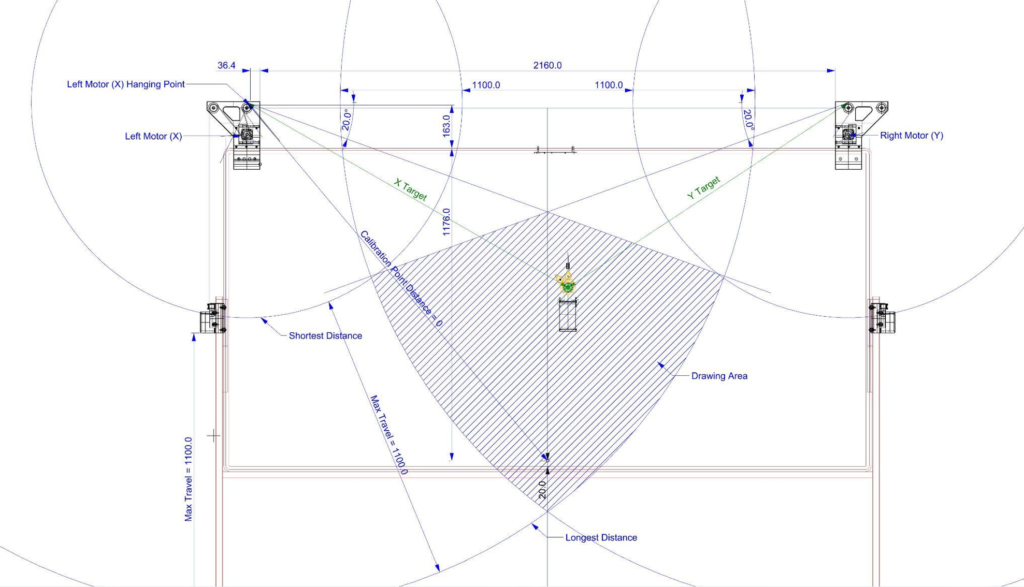
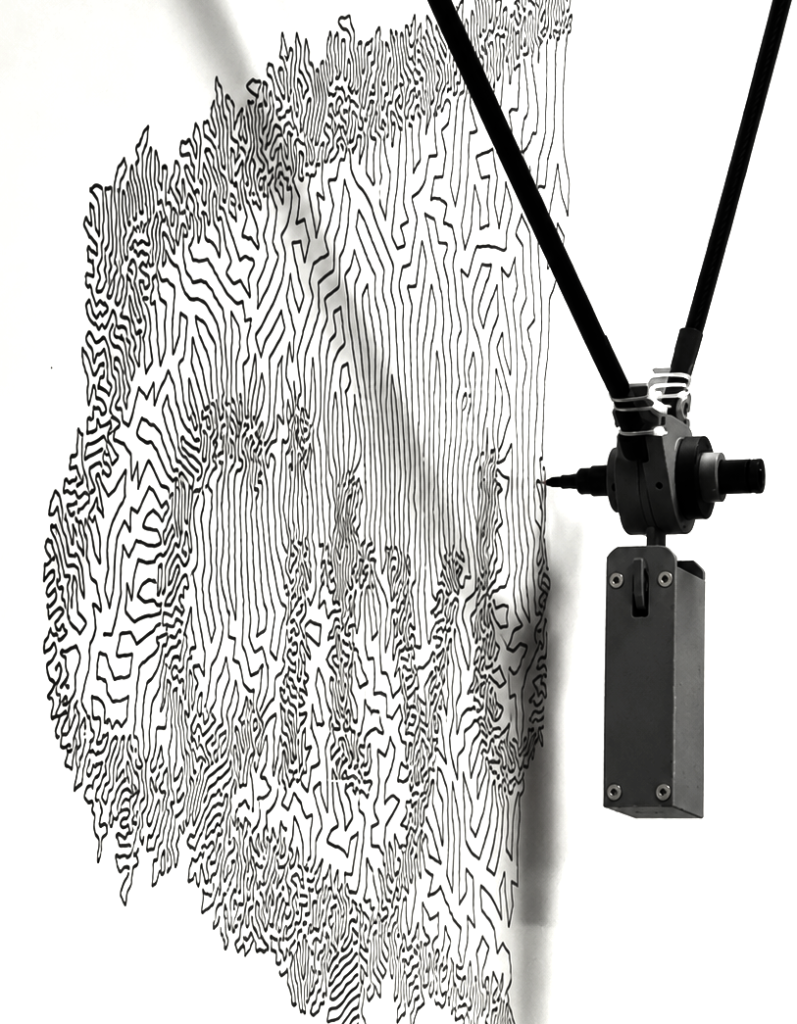
Figure 4. Plotter geometry and pen-holder detail. Left: the setup diagram relates motor positions and cord lengths to the drawing area. Right: a close view of the pen holder beside the drawn lines.
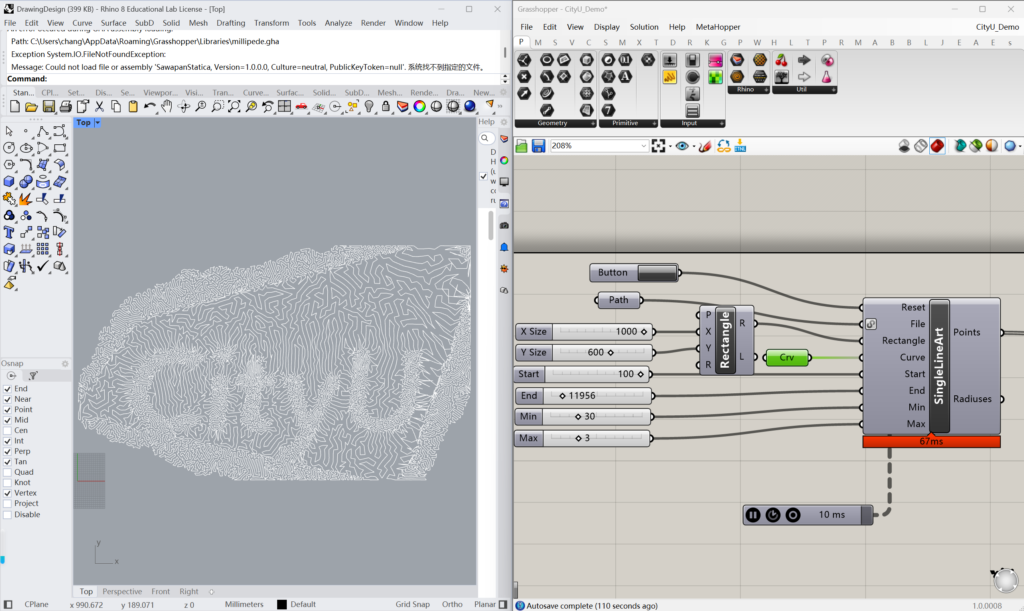
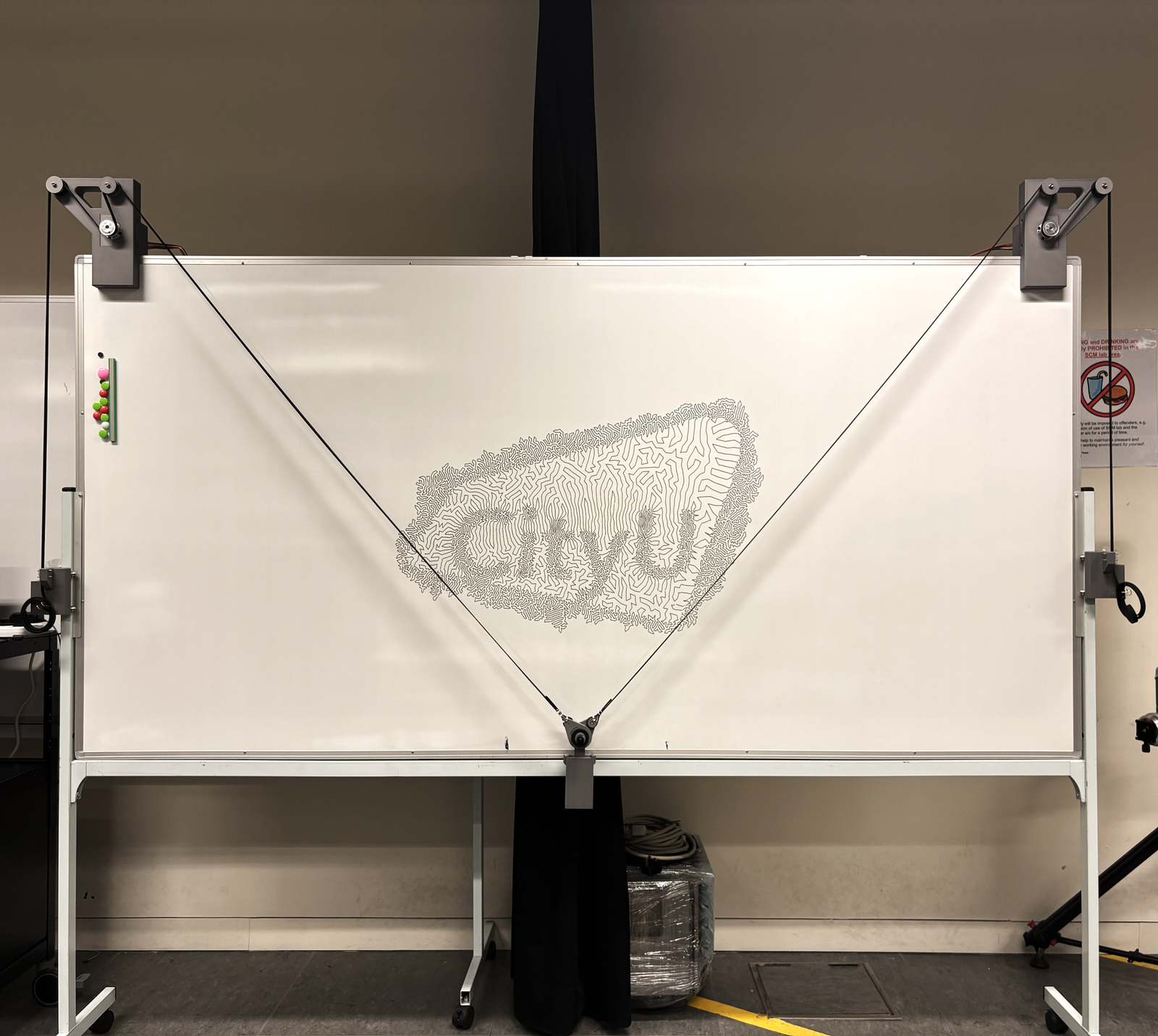
Figure 5. Digital preparation and physical output. Left: the CityU drawing in Rhino and Grasshopper. Right: the corresponding drawing produced by the hanging pen plotter.
Collaborations: Professor Victor Leung (hanging pen plotter design), Jing Chang (digital drawing design and execution)
Source code: The Grasshopper component for CityU logo design in Figure 4 and Figure 5 is by Mahdiyar, downloaded from https://discourse.mcneel.com/t/single-line-continuous-art/115891.
V. CHAPTER 4 – DRAWING ACROSS SURFACES
What changes when a drawing moves from a flat sheet to a curved object?
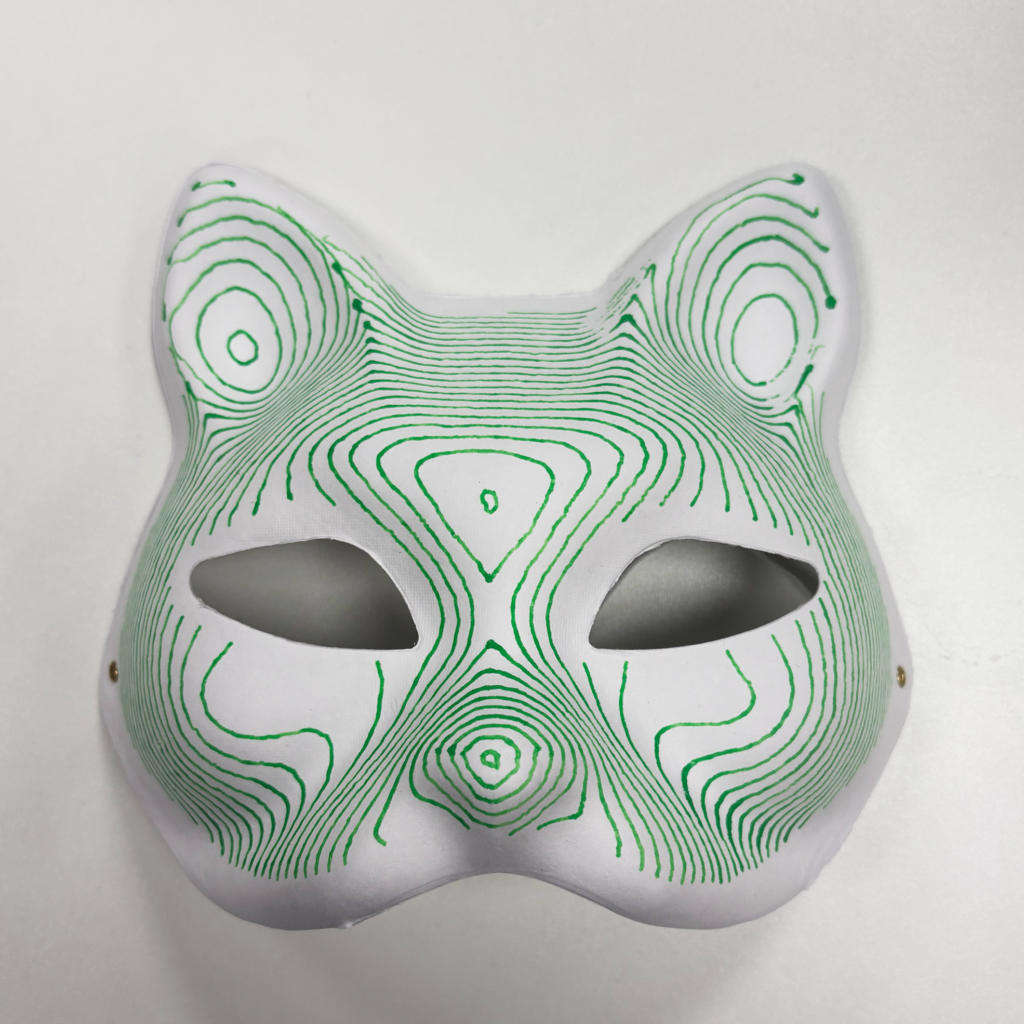
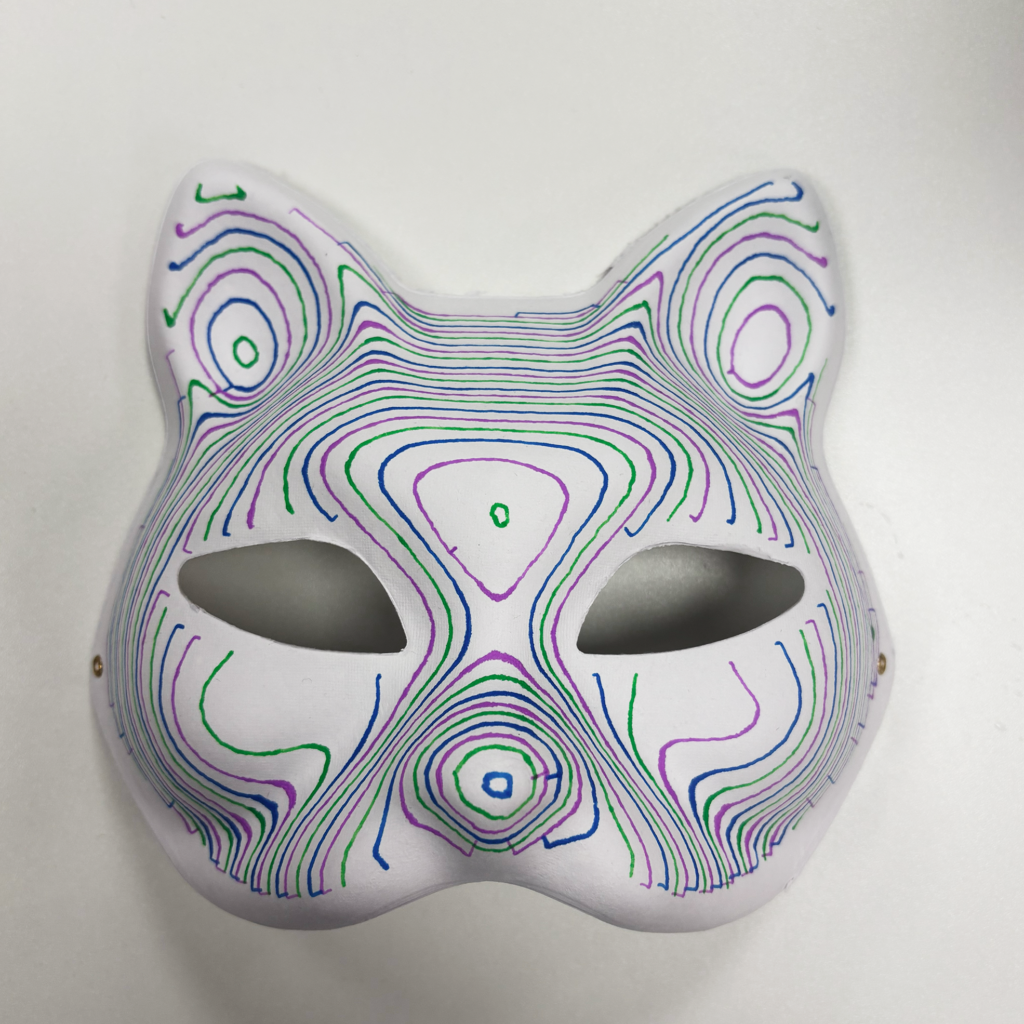
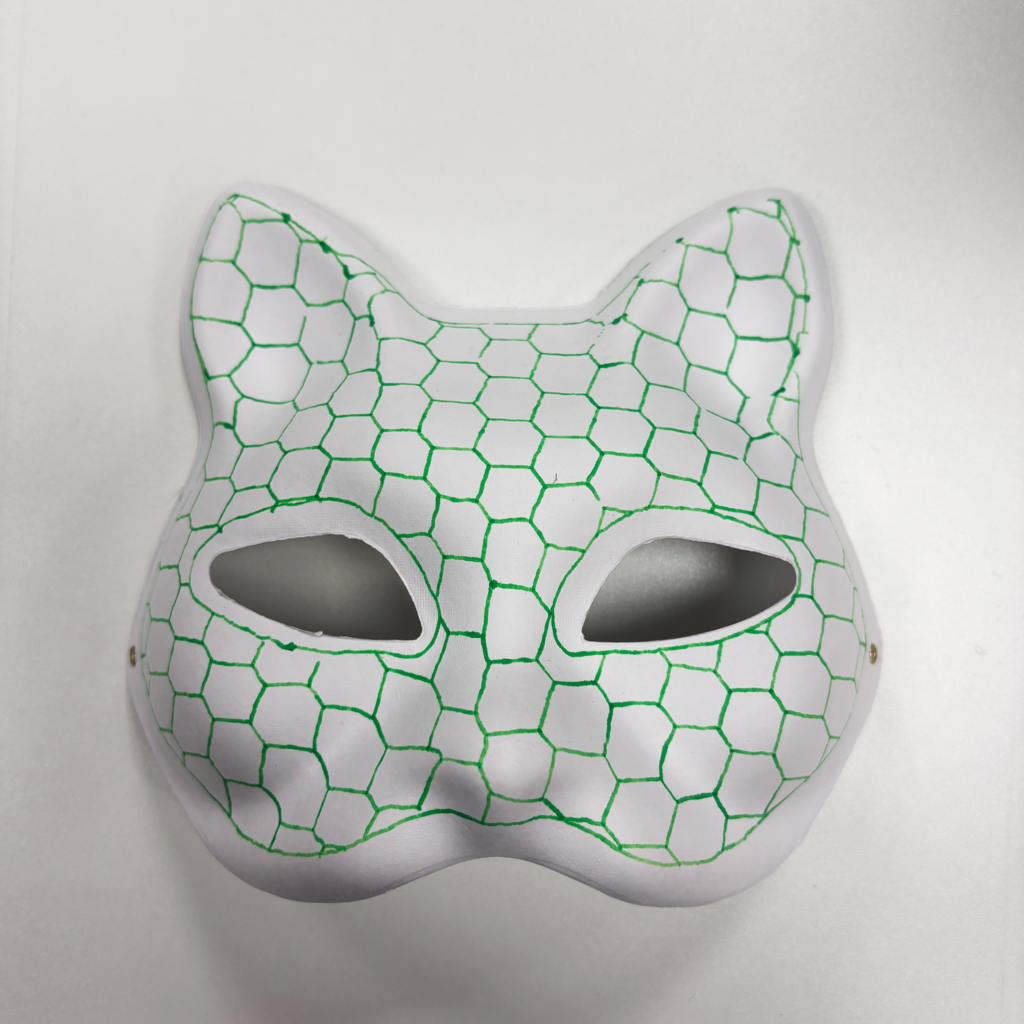
The robotic mask drawings extend the series to a curved surface. A Universal Robots arm carries the pen across the mask, bringing the drawing path, tool position, and surface shape into the same process.
The raised nose, cheeks, and ears introduce changes in surface direction. Drawing across these areas requires attention to how the tool approaches and contacts the object. The finished masks explore flowing lines, layered colors, and polygonal patterns, showing different ways of organizing marks across the same type of surface.
Video 3. Robotic drawing on a mask, from digital simulation to physical execution. The sequence shows the relationship between planned movement, the pen, and the curved surface.
Collaborations: Jing Chang (mask drawing design, and robot arm drawing planning, simulation and execution), Minran Xue (robot setup in Grasshopper), Zeyang Wu (pen Holder design and fabrication).
VI. REFLECTIONS
Across the series, a digital path provides only part of the drawing’s design. The pen determines how a line meets the surface; the mechanism determines how the tool moves; and the surface introduces further conditions for contact. Designing a machine drawing therefore involves decisions about geometry, tools, movement, and materials together.
The four chapters move from studying marks to examining the systems that produce them. This provides a basis for teaching creative coding through physical experiments. Drawings offer a visible connection between a computational rule and its material result, giving students something concrete to examine, discuss, and revise.